
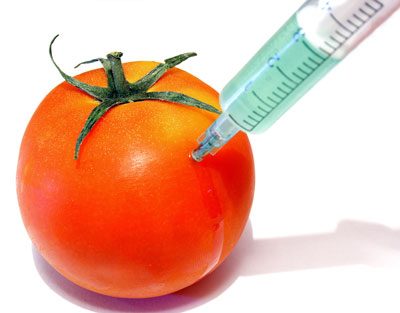
I’ve been hearing a lot about genetically-modified foods lately. Are they OK for us to consume? Will they affect our fertility? Do we even know when we’re eating them?
And what is genetically-modified food, or organisms, anyway? GMO (genetically-modified organisms), as the name implies, are organisms (such as plants and animal) have had their genetic characteristics modified for a purpose: either to make crops resistant to herbicides and pesticides, enabling farmers to spray crops to destroy pests without killing their crops in the process (corn, soy and sugar cane have been modified for this purpose); or to kill harmful insects so that insecticides are no longer needed (sweet corn), or to remain fresh on the shelves longer (tomatoes, strawberries, pineapples, sweet peppers and bananas have all been modified).
Animals, including cows, fish, and chicken, can also be genetically modified; although they have not hit the market just yet.
Here’s how modifying these genes can and has backfired. In the case of creating a crop that is more resistant to pesticide, such as soy, the pests can become resistant to the crop spray and then it’s useless. The crop can also pollinate weeds making weeds resistant to pesticides (called “superweeds” which are now becoming a problem with GM soy crops). A variety of insects like the butterfly are at risk of being killed. The first GM tomatoes were made resistant to antibiotics, and these transferred to the people and animals that ate them, making them more resistant.
In the Biology of Belief, Dr. Bruce Lipton writes:
“Now that we are aware of this inter- and intra-species gene transfer mechanism, the dangers of genetic engineering become apparent. For example, tinkering with the genes of a tomato may not stop at that tomato, but could alter the entire biosphere in ways that we cannot foresee. Already there is a study that shows that when humans digest genetically modified foods, the artificially created genes transfer into and alter the character of the beneficial bacteria in the intestine. Similarly, gene transfer among genetically engineered agricultural crops and surrounding native species has given rise to highly resistant species deemed super weeds. Genetic engineers have never taken the reality of gene transfer into consideration when they have introduced gen4etically modified organisms into the environment. We are now beginning to experience the dire consequences of this oversight as their engineered genes are spreading among, and altering other organisms in the environment.”
Then of course there’s the whole political side of the controversy on the potential of just a few industries owning (through patents) all the food producing power in the world, which I see as a dangerous thing.
Already, in the US many of our plant-based products have been genetically modified: soy (93%), corn (86%), tomatoes and much more. See this table in Wikpedia.
So, then, how does it affect fertility? There was a study in Austria that showed that GM corn had a damaging effect on the reproductive system. Quoting from this article: “…it became apparent over a period of 20 weeks that the fertility of GM corn fed mice was seriously impaired, with fewer offspring than mice fed on non-GM equivalent material. In a multi-generational trial, mice fed with GM maize had fewer offspring in the third and fourth generations, and this difference was statistically significant.”
More reading on GM foods and fertility here: http://www.dailymail.co.uk/health/article-1085060/Why-eating-GM-food-lower-fertility.html and http://msmagazine.com/blog/blog/2010/06/04/can-gm-foods-modify-your-fertility/
So how do you avoid GM foods? Now that’s the problem. We consumers usually have no idea we’re eating them! GM food is not required to be labeled as such in the US. And many processed foods contain some GMOs. Purely GM foods have to be labeled in Europe (corn, for example), but not always if it’s an ingredient (corn oil, for example). Europe in general has much stricter requirements over GM foods and labelling. So, what can you do?
In the US and Canada, foods labeled 100% organic are not allowed to contain any genetically modified organisms or been fed genetically modified feed. So buy organic as much as possible, esp. produce! You may also want to avoid processed foods, esp. those containing soy or corn. For more great tips see this article.
Bottom line: eat 100% organic as much as possible and just do the best you can. It’s all we can do.
photo by: http://thetidbit.com/

