
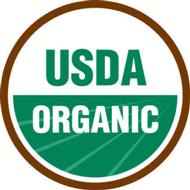
Are any of my U.S. readers also Costco members? If so, you will notice an interesting piece in the September, 2009, Costco Connection about “truth in labeling” when it comes to food products labeled as “natural” as opposed to “organic.” In David Horowitz’s column on page 13 he reminds readers that food products labeled organic are regulated by the government and those labeled “natural” are not.
What does this mean? According to the United States Department of Agriculture (USDA), organic foods must be produced without using harmful, conventional pesticides, fertilizers that contain synthetic ingredients or sewage sludge, bioengineering, or ionizing radiation—all of which can take a toll on your body and fertility. For organic meat, poultry, eggs and dairy no growth hormones or antibiotics must have been used in the animals from which these products came. For foods that contain more than one ingredient (packaged foods), at least 70% of their content needs to be organic before the product can carry the organic label. For packaged foods, there can be additional levels of “organic.”
Products labeled “natural” on the other hand are a completely different story. As Mr. Horowitz’s column points out, there is only regulation over the term ”natural” when it’s applied to meat and poultry, in which the USDA has requires that the meat contains no artificial ingredients or added color and is minimally processed (a process that doesn’t fundamentally alter the raw product). That doesn’t cover the use of growth hormones or antibiotics, which is prohibited in the organic variety.
This is the only area the word “natural” is regulated, and I’ve seen that word slapped on to products that may appear to be natural, but one glance at the ingredients listed on the back verifies that they are anything but. I have a friend who worked as an executive in market research for a conglomerate food company and she flat out told me, “natural” means nothing. We slap it onto processed foods for marketing purposes. More people will buy them if it says “natural.”
This is not to say that all food products abuse the natural label; some do make the effort. But it’s up to us, the consumers, to figure that out. The way you do that is CHECK THE LABEL. Always! Flip the package over and scan the ingredients list. If there is anything unhealthy listed, skip it. If there are too many ingredients listed, say more than five or so as a guideline, skip it. If you don’t recognize what something is, go home and look it up on the Internet. Better yet, just stick to organic as much as possible.
Finally, when it comes to packaged foods, keep in mind that just because it’s labeled organic doesn’t necessarily mean that it’s automatically good for you. If organic cane sugar is listed as a first or second ingredient, meaning there is more of it than other ingredients in the package, then this is a sugar-rich item and not so good for you! You should be avoiding all processed sugar, even if it’s organic.
Also, if there’s something you’d like to see covered in this blog, let me know!
Be well and stay healthy.

